Web, app and React Native development
From the idea to the finished site, and to the application behind it.
Websites and web apps with React and Vite, apps for iOS and Android with React Native or natively in Swift. You say what you need. I design it, build it and hand it over. I keep running it afterwards if you want me to. What comes out of it is yours, including everything underneath.
Book an introductory call (20 min)Services
What I build
Websites
From a single page to a multilingual presence. Design, build, content. With a CMS if you want one, so you can edit without asking me.
Web apps
Applications with sign-in, a database and logic of their own: booking, loyalty cards, an internal area, connections to what you already use.
Native apps
iOS apps, built and taken all the way into the App Store: submission, review, updates. Critique Incognito sits there as an independent app of mine.
Hosting and operations
Domain, deployment, backups, updates. One steady contact after launch as well, instead of a number nobody picks up.
Being found
Prerendered pages, clean addresses and structured data, so search engines and AI assistants can read the site instead of guessing.
What it is built with
Four tools, and when each one is right
The choice of tool decides what a change costs later. That is why it is here and not in the small print. Built with them: razbiram.com, live on the web, Critique Incognito in the App Store — and this site.
- websites and web apps
React with Vite
For everything that runs in the browser. Pre-rendered, so search engines and AI assistants can read the page instead of waiting for a script. No page builder underneath that you cannot leave later.
- iOS and Android from one codebase
React Native
When the same app has to run on both phones. Built once, shipped twice — that halves not just the build but every change after it.
- when the device itself is the point
Swift, native iOS
Camera, offline use, Wallet, system integration. Where a cross-platform app hits its limit, it gets built natively instead of worked around.
- the second store, when it counts
Native Android
The same reasoning for the other side: its own implementation where the platform itself is the reason for the app.
How it runs
How I work
Introductory call
20 minutes. What you need, for whom, by when.
Quote
Fixed price, fixed scope, fixed date.
Build
Design, build, interim versions to look at.
Launch and after
Handover with every credential. Operations if you want them.
Changes afterwards
Every change runs through the same check chain as the build: types, tests, legal status, prerendering, security — and only then does it ship. That is why a change takes days rather than weeks and costs little: the path is built, not assembled from scratch each time.
Price
on request
Scope, features and integrations vary too much for a price tag. After the introductory call you get a fixed price.
Terms
What is not included
Ongoing content maintenance, campaigns and legal advice. Legal texts come from your lawyer; I build the site so that it keeps what those texts promise. Changes of scope are agreed beforehand.
Work
Built, shipped, running

Personal coach · website
Replaced a ten-year-old WordPress site with a custom app. Content carried over in full, redirects in place, switched over live.

Personal
A personal website: conceived, designed, run.

Website · WordPress
A yoga website on WordPress, from design to operations.

Photography · own portfolio
My own photography portfolio: portrait, fashion, editorial and sport. Designed, built, operated.

Bakery · website
The presence of a Scandinavian bakery in Plovdiv: story, menu and loyalty card. Running, still at the address it was built on.
Café · Platform
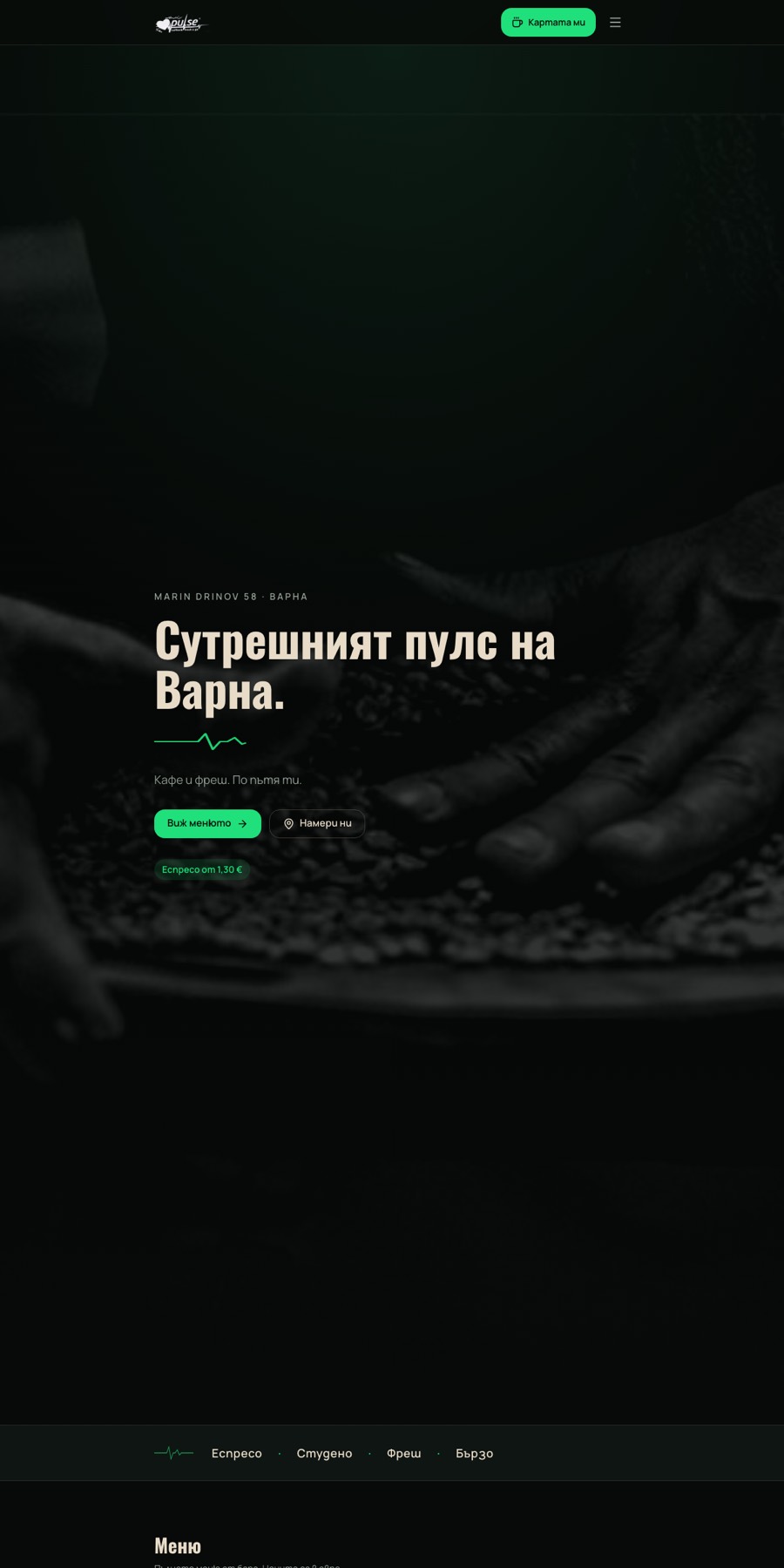
Digital presence for a café in Varna: menu and loyalty card. Launching soon.
… and many more, this is just a selection.
See all projectsWhy not on your own
Built yourself is finished fast. It is not checked.
A site comes together in an afternoon these days — with a builder, or with an AI tool that writes the code. That is real progress, and for an experiment it is enough. What does not come together is the checking: whether the dependencies carry known gaps, whether the site gets found, whether the privacy policy covers what the code actually does. Nobody notices on day one. It surfaces when a client calls.
Checked, not assumed
Every build runs through the same chain: types, tests, legal status, dependency security, load time. What does not pass does not ship.
You own what was built
Source, content and domain are yours. At handover you get every credential, and you can go to someone else at any time.
Changes cost little
Because the path from change to launch is built, not assembled from scratch each time. Days rather than weeks, and no ticket queue in between.
The difference
Made yourself or built
| Made yourself | Built and looked after | |
|---|---|---|
| A change after launch | you, when you have the time | said and live, within days |
| What a change costs | your time | little — the path is automated |
| When something breaks | you find out when a client tells you | the check chain catches it before it ships |
| Security of dependencies | unchecked | checked on every build, gaps closed before launch |
| Being found | a checkbox in the tool | measured: titles, descriptions, structured data, load time |
| Data protection | depends on the provider | servers and services chosen, the policy matches the code |
| Ownership of the source | usually no, often unclear | yes, with every credential at handover |
| Who is accountable | you | the person who built it |
Anyone with the time and the technical depth should do it themselves — for a page meant to live four weeks that is the right call. This table does not say you cannot. It says what has to be checked for it to hold.
The risk
What happens if it does not fit
The price is fixed beforehand
After the introductory call you get scope, price and date in writing. Anything added later is a separate item with its own price — never a surprise invoice.
You see work in progress
You do not wait until the end. There are states to look at, and you say something while changing is still cheap.
Handover means handover
Every credential, the source, and instructions for deploying it. Also if you do not keep operations with me.
Frequent questions
What gets asked before a conversation
- What does a website cost with you?
- A fixed price follows the introductory call, because scope, features and integrations differ too much. A site with five pages and an application with sign-in and a database are not the same job. What you do get: a fixed price, a fixed scope and a fixed date, before anything is built.
- How long does it take?
- A focused presence is usually live in three to six weeks. What it depends on: how many pages, whether text and images are ready, and how fast feedback comes back. The date is set at the start.
- Can I edit the content myself later?
- Yes, if you want that. The site then gets an editing interface where you change text and images without asking anyone. If you do not need it, things stay simpler and cheaper.
- Do you also handle hosting and operations?
- On request. Domain, delivery, backups, updates, and one person to call when something breaks. It is a separate, cancellable item — not a bundle with the build inside it.
- Do you work alone?
- Design and build sit with me; for scope beyond that I work with people I have built with before. Your point of contact stays the same.
- What about SEO?
- The technical side is built in: prerendered pages, clean addresses, structured data, load times that get measured. What is not included is ongoing content work and campaigns — that is a separate job and a separate contract.
Tell me what should exist.
Twenty minutes are enough to find out whether it fits: what is needed, by when, and what it costs.